
Just received the bad news, or worried it’s on the way?
You felt it give way, you heard something pop, and now, it’s time to accept the fact – you’ve might’ve torn or ruptured your ACL. It’s a nervous time for anyone; you’re worried how you’ll get around at work, worried if you’ll ever get back to high-level sport, and generally apprehensive about moving. It’s not a good place to be in. At O-health, we recognise this, and we’re here to give you our best possible effort to help guide you through your rehab journey.
At O-health, anterior crucial ligament (ACL) injury management focuses on rapid stabilisation, early symptom management, and patient-centred decision making. Our 5 step protocol involves a comprehensive knee assessment, hinged knee bracing to guard against secondary instability, prompt MRI diagnostic referral, early activation, and guided education regarded surgical vs non-surgical routes and pathways.
Historically, patients have been told to rest and wait weeks for diagnostic scans before beginning any sort of ACL rehab. However, modern physiotherapy and clinical evidence show that immediate, proactive management significantly improves long-term outcomes and keeps all recovery pathways open.
1). Clinical Assessment
When you present with an ACL injury, our first priority is establishing a clear working diagnosis through a thorough clinical and data-backed evaluation. During your assessment, your physiotherapist will perform:
- Subjective Assessment: Reviewing the mechanism of injury (i.e. how you actually got injured in the first place), and assessing immediate swelling and instability. This helps give our team a picture of how the injury ocurred.
- Objective Assessment: Using specific ACL and knee stability tests alongside range of motion and movement evaluations. Based on if you’ve just injured your ACL (acute), or if it’s been a little white afterwards, our team can get objective measures using VALD testing, allowing for precision measurements on not only the strength of the knee, but the surrounding muscles, such as quads and hamstring.
Establishing a diagnosis of a suspected ACL tear early on allows the team to implement protective and proactive measures immediately.
2. Protection & Stabilisation
Protecting the ACL and the knee during the initial stages is critical to prevent secondary knee or cartilage damage. This allows us to better preserve all future treatment options, such as surgery or non-surgery outcomes.
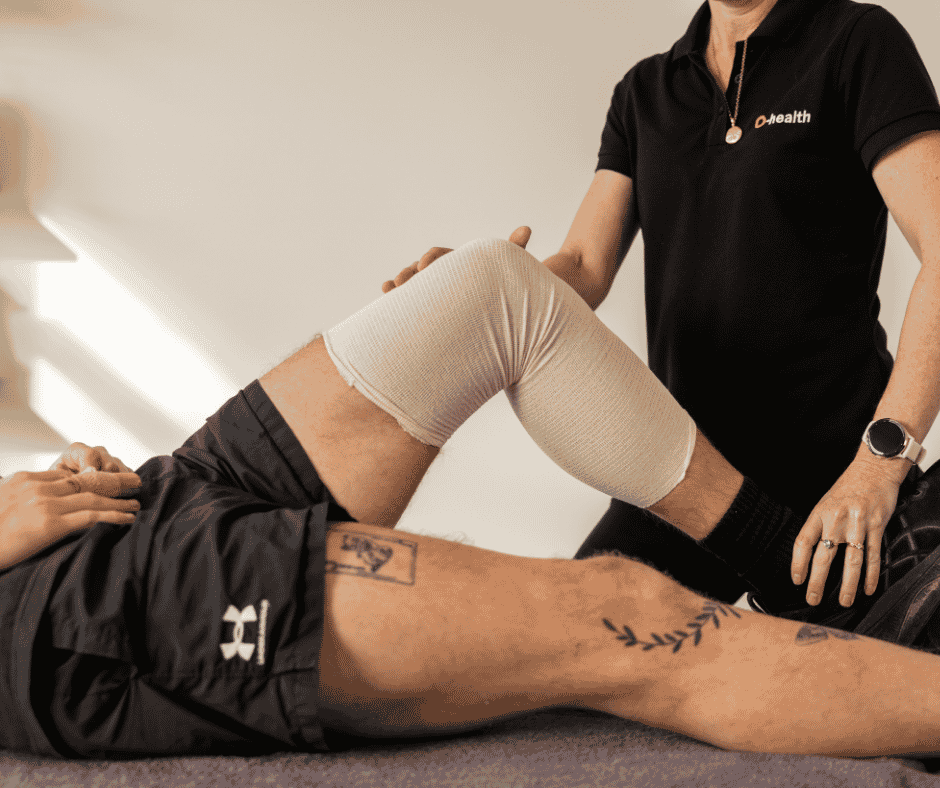
We’ll typically fit you with a hinged knee brace using specific clinical parameters.
- Free Flexion: Allowing comfortable, unforced knee bending as tolerated by your pain & movement
- Controlled Extension: Avoiding end-range extension to reduce strain on the healing environment
- Extension Locking: Commonly locking extension around 30 degree, and progressively extending range as the ACL tear settles.
Bracing is vital because it stabilises the knee against secondary knee injuries and keeps non-surgical options viable.
3. Diagnostic Imaging & Specialist Referral
To confirm the extent of the injury and screen for associated joint damage (such as meniscal tears or bone bruises), formal imaging is required. We coordinate diagnostic pathways by:
-
Organising an MRI Referral: Referring directly for an MRI via radiology or in collaboration with your General Practitioner (GP).
-
GP Collaboration for Specialised Protocols: Involving your GP early if structured non-surgical pathways (such as the Cross Bracing Protocol) are being considered.
-
Specialist Pathways: Facilitating direct referrals to trusted orthopedic surgeons or sports medicine specialists when surgical opinion or specialised medical input is indicated.
4. Proactive Early Rehab – Don’t Wait for the Scan
One of the most critical principles of our ACL rupture rehab protocols is not waiting for MRI results before beginning treatment.
During your first 10 days (sessions 1-2 onwards), our active management focuses on:
- Quietening the Knee: Implementing targeted strategies to manage swelling, reduce pain, and settle other irritations as a result of the injury.
- Early Quad Activation: Re-establishing strength, movement and connection to the quad muscles is important to prevent rapid muscle inhibition and strength loss.
- Locking in Consistent Early Care: We recommend three clinical consultations within the first 10 days to build momentum, manage pain and issues, and guide safe movement progression. This also allows us plenty of time to communicate with your GP and work together to find the right option for your next steps.
Step 5: Early Education & Shared Decision Making
ACL rupture rehab is not a “one-size-fits-all” process. Today, both surgical reconstruction and non-surgical (conservative) rehabilitation are evidence-based options depending on you as an individual.
From the initial sessions, our team introduces these pathways early:
-
Explaining the pros, cons, and timelines of surgical vs. non-surgical management.
-
Considering key individual factors including patient age, sport or activity goals, occupational physical demands, and joint stability.
-
Planting the seeds of education early so that a fully informed, shared decision can be made alongside orthopedic specialists, GPs, and the patient over time.
Frequently Asked Questions
Do I need to wait for an MRI result before starting physiotherapy?
Nope. Waiting weeks for diagnostic scans can lead to joint stiffness and rapid muscle loss. Starting guided physiotherapy early helps reduce pain and swelling while restoring quad muscle activation.
Is surgery always necessary for ACL injuries?
No. Significant ACL research demonstrates that many individuals can successfully return to active lifestyles and sports through non-surgical rehab. The decision depends on joint stability, activity goals, and individual preferences evaluated through shared decision making.
Does O-health help rehab ACL injuries?
Absolutely. Helping our patients rehabilitate from significant injuries is one of the most common things we do at O-health.
Why is a hinged brace fitted right after an ACL injury?
A hinged knee brace controls knee extension and protects the joint against secondary injuries. Proper bracing guards against further joint damage and ensures that structured non-surgical healing protocols remain an open option.