
Nearly 1 in 3 people who roll an ankle will sprain it again within 12 months.
In multi-directional sports like Football, Netball, and Soccer, all of which are very popular in Albury Wodonga, are high impact, the ankle gets loaded at speed, on varied angles, and often on uneven ground. This results in the number of ankle sprain recurrences jumping to 73%
Ankle injuries are one of the most common injuries we see at O-health. They’re also one of the easiest to underestimate. The pain settles, the swelling goes down, and the injury looks like it’s finished it’s recovery. But chances are the underlying conditions have not been addressed correctly, and that’s why the sprain recurrence rate is so high.
Why ankles re-sprain
Around half of all ankle sprains are never assessed by a professional. Most people land on one of two plans: push through the pain and hope it settles down, or rest until the pain stops and then get right back into it.
Neither of these approaches rebuilds what the sprain took away. When you roll an ankle, the ligaments on the outside of the joint are overstretched or torn, so the muscles that control the joint lose strength. Then, your position sense, which is how your body senses your placement on uneven ground, is diminished, meaning your placement of your foot and ankle are no longer as stable, and have an even greater chance to re-sprain.
The reason why these re-sprains are so common is because your pain settles well before the full healing process is complete, so when people feel ‘fine’, they decide they’re ready to go back to activity. Your then going back with weaker joints, worse reaction-to-placement time, and less able to handle side-ways pivots – which is exactly the movement that rolled it the first time.
At O-health, we clear your ankle based on how it performs, not how it feels
Feeling better is a milestone, not a finish line.
To get back to the activities you love, your ankle needs to absorb force, hold you steady under your own body weight, and react quickly when the ground or your direction changes. Those are measurable things, so we test them, and we use what we find to decide when you’re ready.
That’s the standard we work to, and it’s why we’d rather test an ankle than guess at one.
Inside our lateral ankle rehab protocol
Our ankle rehab is a staged plan, and it moves at the pace your ankle does:
- Restore full, comfortable range of motion
- Rebuild strength in the muscles that control and protect the joint
- Retrain balance and position sense, so your ankle reacts before you have to think about it
- Build the capacity to handle the specific demands of your sport, your work or your walking track
- Test that capacity before you return, so the decision is based on evidence rather than a feeling
Each stage has something to meet before you move to the next. That’s what makes it a protocol rather than a list of exercises, and it’s what reduces your risk of rolling it again.
You don’t need to work this out by yourself
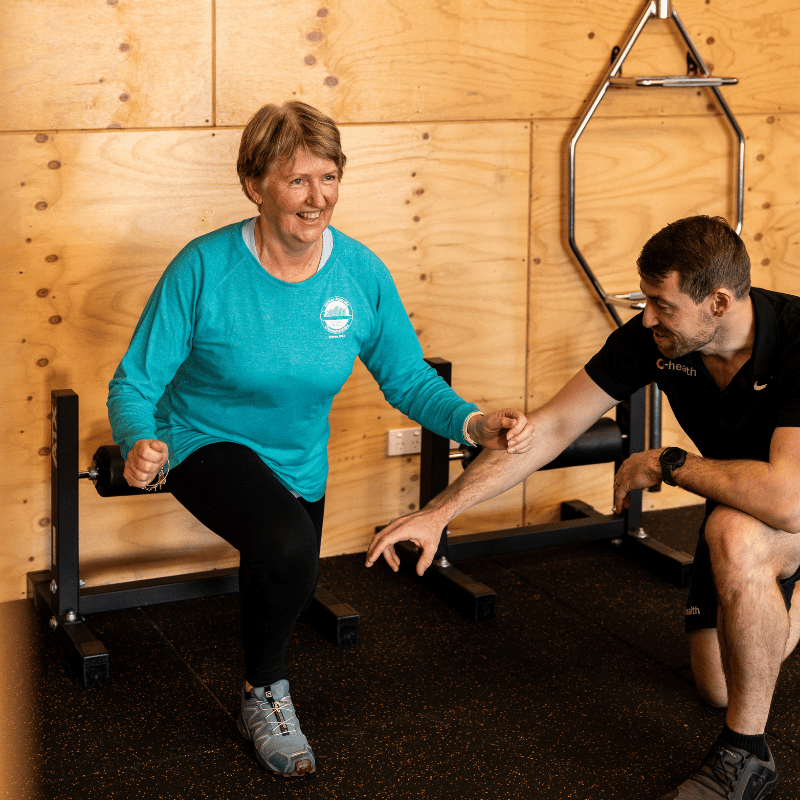
When you come in and see us at O-health, we’ll start by asking questions: what happened, what you’ve tried, what hurts now and what you want to get back to. Then we’ll assess the joint, test how it’s handling load and balance, and show you where it sits today.
You’ll leave with a plan you understand, what we’re building towards, in what order, and what we need to see before you’re back on the court or the field.
It’s not too late to build a better ankle
Whether you rolled it on the weekend or you’ve been working around a wobbly ankle for years, the capacity can be rebuilt. The joint responds to loading at any stage – it just needs the right loading, in the right order.
Book an ankle assessment and find out what your ankle can handle today, and what it’ll take to get it where you want it.
Frequently Asked Questions
Q: How long does an ankle sprain take to heal?
A: Most ankle sprains settle in pain and swelling within two to six weeks, depending on how much ligament damage there is. But feeling better and being ready are different things. Strength, balance and the joint’s ability to handle load take longer to rebuild, and that gap is where most re-injuries happen. Getting an assessment for an O-health physiotherapist or osteopath will help you determine your recovery timeline.
Q: Why does my ankle keep rolling?
A: An ankle usually keeps rolling because the strength, balance and position sense lost in the first sprain were never fully rebuilt. The ligaments heal, the pain goes, but the joint reacts more slowly and tolerates less load than it used to. Each roll makes the next one easier, which is why the cycle repeats.
Q: Should I see a physio or an osteo for a rolled ankle?
A: It’s worth having any sprain assessed, even one that settles quickly. At O-health, our physiotherapists and osteopaths are equally appropriate to assess your ankle sprain. Around half of all ankle sprains are never assessed by a health professional, and that’s a large part of why nearly 1 in 3 people sprain the same ankle again within 12 months. An assessment tells you what’s actually healed and what still needs rebuilding.
Q: Should I rest or move my ankle after a sprain?
A: Early protected movement is generally better than complete rest. Short-term rest helps in the first day or two, but prolonged rest allows strength and balance to decline without rebuilding the capacity the joint needs. The useful question isn’t rest or move, it’s how much load the ankle is ready for right now.
Q: How do I know if my ankle sprain is serious?
A: Significant swelling, difficulty bearing weight, bruising that spreads or pain directly over the bone all warrant prompt assessment, as these can point to a fracture rather than a sprain. Milder sprains are worth assessing too, as the severity of the first injury is only one part of what determines your risk of the next one.
Q: Can I still play sport with a sprained ankle?
A: Playing on a recently sprained ankle raises your risk of a worse injury, and in multi-directional sports like football, netball and soccer, re-injury rates reach 73%. The better question is what your ankle can currently handle. Testing strength, balance and reaction under load gives you a clearer answer than how it feels on the day. That’s what we prioritise at O-health. In some cases, we will move you into our Strength & Rehab program, or Sports Injury Rehab Program, depending on when you get injured, how severe the injury is, and what type of rehab it needs.
Q: What exercises help with a sprained ankle?
A: Rehabilitation generally moves through four stages: restoring movement, rebuilding strength in the muscles that control the joint, retraining balance and position sense, then building capacity for the specific demands of your sport or work. What matters is the staging. Progressing before the ankle is ready for the next stage is what undoes the work. At O-health, our physiotherapists and osteopaths will build you a personalised treatment plan, and then progress your capacity to give you the greatest chance of avoiding a re-sprain.
Q: When can I safely return to sport after an ankle sprain?
A: You’re ready when your ankle can absorb force, hold you steady under your own body weight and react quickly to a change of direction. Those are measurable, so we test them rather than clear you on how the ankle feels. Pain settling is a milestone in the process, not the end of it.
Ready to rebuild your capacity?
Our team can help you understand exactly where your capacity sits today, and build a plan to progress it so you can get back to what you love, and stay there. Book an assessment with the O-health team.