
When Shoulder Pain Doesn’t Settle: What to Do Next
Shoulder pain is common – especially when work, sport, training or parenting load increases.
For some people, it settles within a few days.
For others, it lingers. It eases… then returns. It improves… then flares again.
That’s usually when the questions start:
Is this normal?
Should I just rest it?
Do I need physio?
Will it make it worse if I keep training?
At O-health, we see this pattern every week.
The good news? Persistent shoulder pain is rarely random – and it’s not something you just have to live with.
With the right assessment and a clear plan, most shoulder pain improves, and stays that way.
What Causes Shoulder Pain?
Shoulder pain commonly develops due to one of these core reasons:
- Rotator cuff overload or tendinopathy
- Shoulder bursitis (inflammation of the bursa)
- Repetitive overhead activity
- Sudden trauma or dislocation
- Post-surgical weakness
- Rapid increases in gym or sport load
- Manual work involving lifting or sustained overhead positions
In many cases, it’s not one dramatic injury, it’s a mismatch between demand and shoulder capacity.
The shoulder is highly mobile. That mobility depends on coordinated strength between the rotator cuff, shoulder blade, and upper back.
When load increases faster than the shoulder can adapt, pain is often the result.
Why Shoulder Pain Often Doesn’t Settle On Its Own
Shoulder pain typically becomes persistent for one of three reasons:
1. Load Increased Faster Than Capacity
This commonly happens when:
- Returning to gym or sport after time off
- Increasing volume or intensity too quickly
- Starting a new training block
- Work demands increase (lifting, overhead tasks)
If strength and control haven’t caught up yet, symptoms can linger.
2. Rest Calmed it… But didn’t rebuild it
Short-term rest can reduce irritation.
But if strength, control, and movement patterns aren’t restored, the underlying issue remains.
That’s why shoulder pain often:
- Improves during rest
- Returns when training resumes
- Reappears every few months
Relief without rebuilding capacity rarely solves it long-term.
3. The Plan Didn’t Match Real Life
Generic exercise sheets don’t always reflect:
- Your job demands
- Your sport
- Your post-surgical stage
- Your weekly training load
- Your recovery capacity
When rehab doesn’t match your real-world demands, pain often cycles back.
How Long Should Shoulder Pain Last?
Mild shoulder soreness often settles within 1–2 weeks with sensible load management.
General post-exercise muscle soreness should improve within 24–48 hours.
If shoulder pain:
- Lasts longer than 2–3 weeks
- Keeps returning with activity
- Wakes you at night
- Limits lifting or overhead reaching
- Feels unstable or weak
…it’s a good time to seek guidance.
Persistent shoulder pain isn’t something you need to push through.
Early assessment often shortens recovery timelines.
 What To Do If Shoulder Pain Hasn’t Settled
Step 1: Modify Load (Don’t Stop Completely)
Reduce aggravating movements temporarily.
Avoid sharp, high-speed or heavy overhead work.
But keep the shoulder moving gently. Complete rest often increases stiffness and sensitivity.
Step 2: Maintain Calm Movement
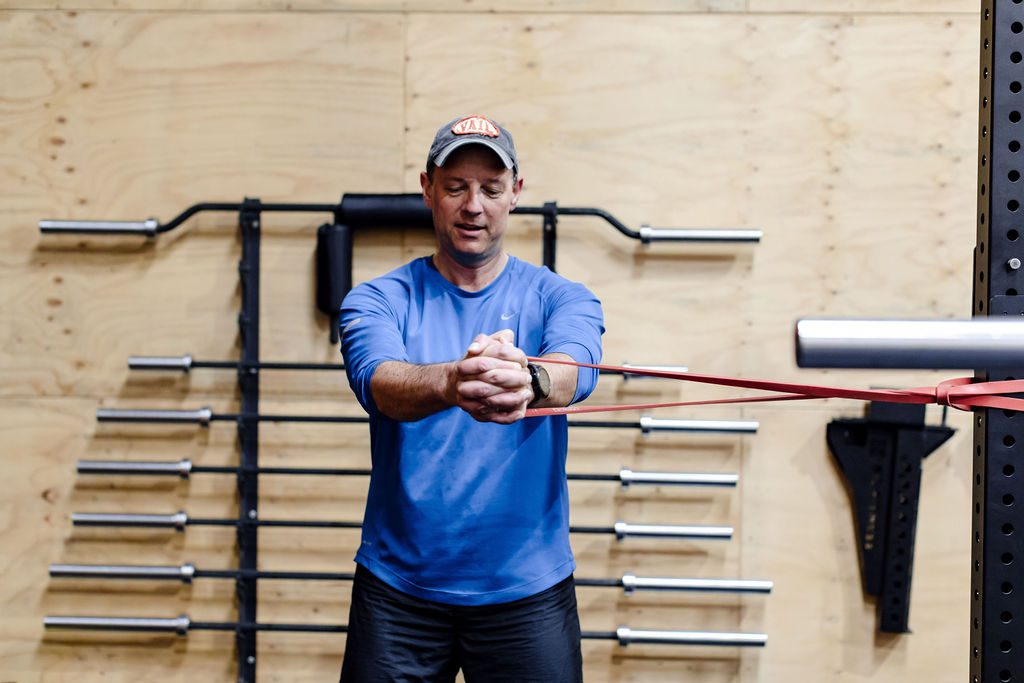
Gentle range of motion work can help.
• Controlled arm circles
• Supported wall slides
• Light scapular control work
• Pain-free isometric holds
Movement reassures the nervous system and maintains joint tolerance.
Step 3: Avoid Random Stretching Alone
Stretching can feel good temporarily, but shoulder pain often relates more to strength and control than flexibility alone.
Mobility should support strength, not replace it.
Step 4: Seek Assessment If It’s Not Improving
If symptoms persist or recur, assessment provides clarity.
You don’t need to self-diagnose, you need to understand what’s happening – and what to do next.
Do I Need Physio, Osteo, or Strength Rehab For Shoulder Pain?
At O-health, this isn’t an either/or question.
It’s a coordinated approach.
Physios assess:
• Rotator cuff strength
• Shoulder stability
• Load tolerance
• Post-surgical progress
• Return-to-sport readiness
They build the initial rehab roadmap.
Osteopaths help:
• Improve thoracic spine mobility
• Reduce protective tension
• Restore comfortable movement
• Address contributing neck or upper back stiffness
Manual therapy can help symptoms settle enough to progress rehab.
Once pain settles, rebuilding strength matters.
This includes:
• Progressive loading
• Gym-based strength progression
• Sport-specific return-to-play work
• Confidence rebuilding
• Performance conditioning
Cleared does not always mean ready.
Strength bridges the gap between rehab and performance.
Frequently Asked Questions About Shoulder Pain
Mild soreness often settles within 1–2 weeks. If pain lasts longer than 2–3 weeks or keeps returning, assessment is recommended.
Complete rest is rarely necessary. Modifying load while maintaining guided movement is usually more effective.
Not usually. Many shoulder conditions involve irritation or overload rather than structural damage.
Usually, no.
Most shoulder pain can be diagnosed through movement and strength testing. Scans are typically only needed after significant trauma, suspected full tears, or if symptoms aren’t improving with rehab.
Your first session includes:
• A discussion about your symptoms
• Movement and strength testing
• Assessment of work or sport demands
• A clear explanation and plan
You leave knowing what’s going on and what to do next.
We commonly see:
• Rotator cuff tendinopathy
• Shoulder bursitis
• Impingement
• Dislocations or instability
• Overuse injuries
Most respond well to structured rehabilitation.
Night pain can occur when inflammation increases or certain positions compress irritated structures. Persistent night pain should be assessed.
The Bottom Line
If shoulder pain hasn’t settled, or keeps coming back, book a Shoulder Assessment with our team.
One team. One plan. Built around real life.
Book an appointment with our team and start building strength that supports your life.