
Building Strength for Confidence, Movement, and Everyday Life
A story about movement, confidence, and what it means to feel strong in your own life.
Every January, the world talks about “getting strong” like it’s one universal idea – gyms, heavy weights, fitness goals, intense routines.
But that’s not the story we hear at O-health.
We hear stories like:
• “I’ve received a diagnosis of osteoporosis/diabetes/Parkinsons”
• “I want to play with my grandkids as I get older”
• “I want to maintain my quality of life for as long as possible.”
For many in our community – especially those living with neurological conditions, chronic pain, balance challenges or long periods without moving a lot – strength isn’t about lifting heavy.
It’s about living fully.
It’s about moving in ways that feel safe.
It’s about reclaiming confidence.
It’s about doing the things that matter most.
This is quiet strength.
Meaningful strength.
Strength that stays with you.
The kind you build through movement, support, and small wins – one steady step at a time.
The Reality: Strength Doesn’t Feel Accessible to Everyone
A lot of people who come to us feel like they’ve been left behind by the “fitness” world.
They’ve had pain, or a diagnosis, or a fall, or a period where life changed how they moved.
They’re not sure where to start.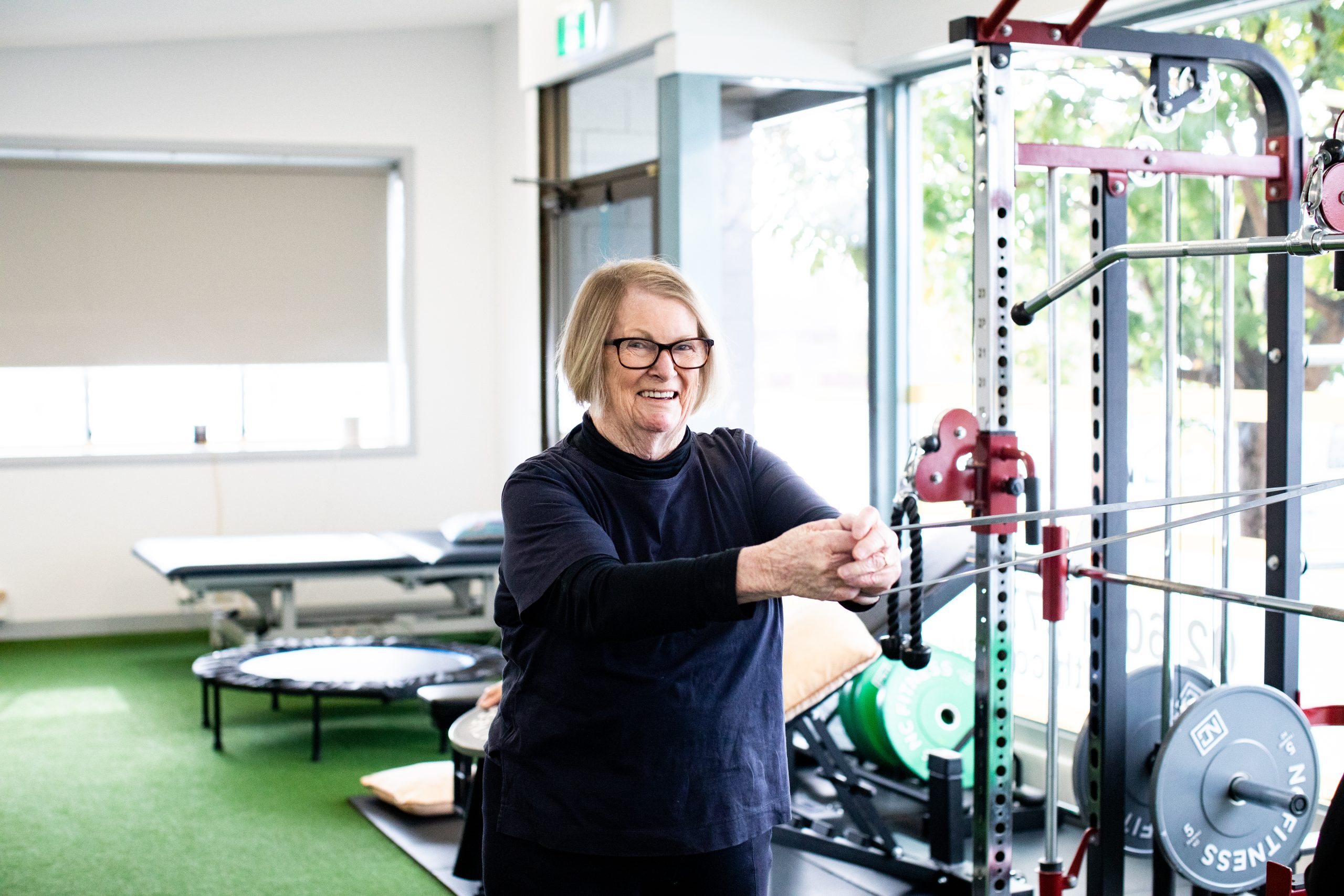
They worry about doing the wrong thing.
They don’t want to make their symptoms worse.
They often say, “I feel behind” or “I’m afraid to move.”
If that sounds familiar, you’re not alone, and you’re not supposed to have it all figured out.
For people living with:
• Neurological conditions (Parkinson’s, MS, neuropathy, post-stroke changes)
• Chronic pain
• Weakness or fatigue
• Balance concerns
• Mobility challenges
…the idea of “strength training” can feel overwhelming or unsafe.
Here’s the truth we want every person to know:
Strength isn’t something you earn by being fit.
Strength is something you build by moving in ways that feel safe, supported and possible for you — right now.**
And when you do that, capacity grows.
Confidence grows.
Independence grows.
Hope grows.
The 3 Elements of Real-Life Strength
These are the pillars we work on with patients every day.
This isn’t gym-based lifting.
It’s movement-based living.
Functional strength includes:
• Sit-to-stands
• Step-ups
• Supported lunges
• Reaching tasks
• Lifting light loads
For chronic pain, neurological conditions and those who haven’t moved in awhile, functional strength supports:
• Coordination
• Joint protection
• Muscle activation
• Balance
• Everyday function
• Confidence
• Falls prevention
• Getting off the floor
This is strength that helps you live your life.
Before strength can grow, your nervous system needs to feel safe.
Movement therapy teaches your body how to move with control, predictability and balance – especially important for people who feel:
• Afraid of falling
• Unsteady on stairs
• Stiff or shaky
• Off-balance due to neurological changes
• Unsure whether movement is “safe”
Controlled movement includes:
• Balance practice
• Slow, purposeful movements
• Gentle mobility
• Stability exercises
• Breath-supported movement
This is strength that helps you trust your body again.
Not fitness conditioning.
Not “push harder” conditioning.
Sustainable conditioning is about maintaining and rebuilding your baseline cardiovascular capacity – the energy your body needs to get through everyday life, now and as you age.
This matters because our cardiovascular capacity naturally declines each decade.
If we don’t maintain it, everyday tasks can start to feel disproportionately hard.
If we do, we give ourselves a much longer, more confident glide path into our 70s, 80s and beyond.
Sustainable conditioning is pacing-aware, fatigue-informed movement designed for people with chronic pain, neurological conditions, or low energy levels.
It improves:
• Stamina
• Daily consistency
• Circulation
• Pain management
• Resilience
• Participation in life
It might look like:
• Short walks
• Comfortable cycling
• Gentle interval walking
• 10–15 minute movement blocks
This is conditioning that helps you participate in life – not just endure it.
How To Start When You Feel Unsure or Deconditioned
For many people, the hardest part isn’t the exercise, it’s knowing where to begin.
After time away from movement or after living with pain, diagnosis or fatigue, many people believe they must “start big.”
But meaningful progress begins differently.
It begins with something your body can say yes to.
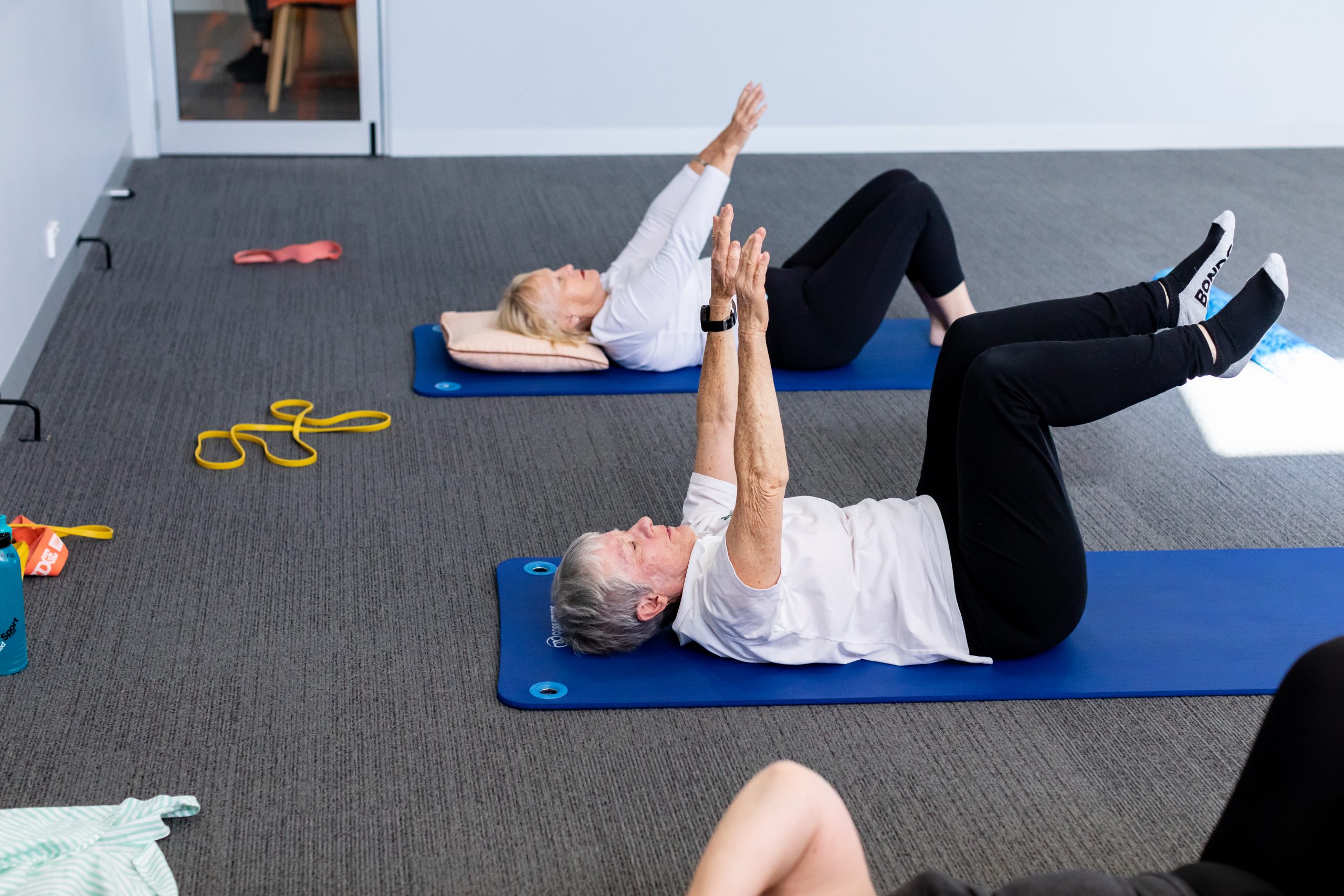 A small, safe, achievable step.
Something that feels possible.
Something that builds confidence, not fear.
A good starting point might be:
• 10–15 minutes of gentle movement
• A few slow sit-to-stands
• Supported step-ups
• Holding a balance with a hand on the bench
• Gentle mobility
The goal isn’t intensity, it’s safety, confidence and consistency.
When To Seek Guidance (and Why It’s a Smart Choice)
Reaching out for help isn’t a setback. It’s momentum.
Seek guidance if you’ve noticed:
• Increasing unsteadiness on stairs or uneven ground
• A recent near-fall
• Chronic pain that flares more often
• Fatigue that lingers
• Daily activities feeling harder than before
• Uncertainty about whether movement is safe
• Changes in balance or coordination due to a neurological condition
These are important signals, not warnings, but invitations. Invitations to build confidence, safety and capability again.
How O-health Supports This Kind of Strength
Movement therapy is at the heart of what we do.
Not high-intensity fitness.
Not intimidating routines.
Not one-size-fits-all programs.
We create thoughtful, supportive, evidence-informed pathways that help you feel safer, steadier and more confident in your body.
Our Physiotherapists help you start safely, reduce pain and build a foundation you can rely on.
Our Osteopaths restore comfort and ease, supporting mobility and reducing tension.
Our Exercise Physiologists design tailored movement plans for chronic pain, neurological conditions, balance challenges or low energy, helping you progress gradually and sustainably.
Our Strength & Rehab and SIRP programs offer a welcoming space where movement feels safe, supported and achievable – on good days and tough days.
At O-health, strength isn’t defined by numbers.
It’s defined by you – your life, your goals, your hopes, your starting point.
Everyday Strength Checklist
You’re building meaningful strength if you can say “yes” to even one of these:
☐ I feel more confident walking
☐ I’m steadier when standing or turning
☐ I need fewer breaks
☐ I can get out of a chair more easily
☐ I can climb stairs
☐ I feel safer showering or dressing
☐ I can participate more in family or community life
☐ I feel supported, not alone
☐ I trust my body more than I did last month
Strength starts small, but it grows into something life-changing.
Related Pages & Articles: